Voices Beyond Borders
2024-02-02T00:00:00.000Z
By Noah Zehmans, Maja Saveva, Halima Ahmed, Madie Decardie Torres, Lily Nobel, Erin Koo
Oberlin College prides itself on diversity. However, the very first International Education Week in the college’s recent history only took place this November. Fourth year Fawad Mohammadi, the International Student Representative on Student Senate, who is from Afghanistan, expressed his surprise at having this event finally organized.
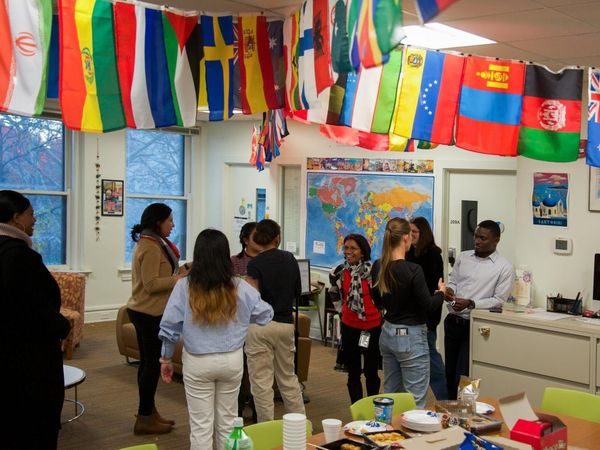
Noah Zemans: Yeah, I think that’s one thing that I feel like is lacking– most times, when there’s an international event, mostly only international people go, or people who are specifically part of that group. Maja: That was Noah Zemans, a first-year international student from Bolivia studying at Oberlin College, a small liberal arts school in Ohio. Noah is one out of about 300 international students who represent 50 different countries on Oberlin’s campus. With such diversity, it is important for these students to find belonging and community in their new living and learning environments. The US is enriched with international food, culture, and people, adding up to a significant part of the student population in the US calling a different country home. For that reason, this episode will focus on community building, or more specifically the experiences of said international students and their journey of finding community in being international and interacting with domestic students. You’re listening to “Voices Beyond Borders”, an episode about international communities by journalism students at Oberlin College. Maja: I’m Maja Saveva from Macedonia. Halima: I’m Halima Ahmed from Somalia. Maddie: I’m Maddie DeCardie Torres, an expatriate from the U.S. Lily: And I’m Lily Nobel from the United States. Lily: Oberlin College prides itself on diversity. However, the very first International Education Week in the college’s recent history only took place this November. Fourth year Fawad Mohammadi, the International Student Representative on Student Senate, who is from Afghanistan, expressed his surprise at having this event finally organized. Fawad Mohammadi: This showcase, this education week, happened for the first time as far as I know in the past seven years. So that shocked me, how Oberlin’s claim of inclusivity and appreciating diversity is not extended to other cultures, especially international culture, for international students. Halima: Since this was one of the first international showcases in which domestic students could learn more about the countries represented on campus, as much as people enjoyed it, a hint of dissatisfaction was expressed by our internationals in regards to the divide between domestic and international students. In terms of trying to build a community, internationals try to become friends with domestic students too. Yendi Kai Foo: With Americas, it’s almost like the connection isn’t as instantaneous. It takes a lot longer to form and sometimes you can’t really tell just how genuine it is. Halima: Said Yendi Kai Foo, a second year from Jamaica. First year Noah Zemans from Bolivia agreed. Noah Zemans: Generally, I think there is definitely a division between international students and students from the U.S. It’s hard sometimes to relate to people you don’t have that much in common with. Maddie: Ryo Adachi, an Oberlin alumni from Japan who graduated in 2022 and currently works on campus reiterated this idea by explaining the shared experience of being an international student. Ryo Adachi: International students are my favorite group on campus and it’s always been like that. I think one of the biggest things is the diversity, but also the welcoming atmosphere that these students create. I think that’s because everyone understands what it’s like to be an outsider, right? Because you are coming to the US and in some ways you do experience that– feeling like an outsider, being treated like an outsider. But I think because of that, the group is so welcoming to everyone and eager to learn more about each other. Maddie: Leading off of Adachi’s idea, students and staff noted that even though the school hasn’t hosted as many events to promote diversity in regard to its international community, different offices and organizations have been putting in the work to do so. Jackie Zubin from the International Student Scholar Services, or ISSS for short, and one of the primary organizers of International Education Week, reflected on how the student body of Oberlin received this event. Jackie Zubin: Seeing students buy into it has been very nice to see. I feel like the biggest struggle– and it’s like this for everybody– you read the title of something and you’re like oh, I don’t know if that applies to me. So I think getting past that with students is kind of what I hope to see as this continues year afer year. Yendi Kai Foo: I feel like one of the weird things that happens with Obies, and I’ve never seen this at any other school, is that everyone is so in the spirit of being anti-racist they actively avoid a lot of affinity spaces and international events that we host for the larger community because it’s like, “oh, I don’t know if I belong here, I don’t know if I should be going” and that’s a problem for the international community because the school funds us based on attendance. Lily: Although our international interviewees acknowledged this gap between domestics and internationals, they reiterated how possible and beautiful it is when there is an opportunity to bridge that gap. Zubin from the ISSS office addressed this gap with a glimpse of hope. Jackie Zubin: I’m very surprised by how surprised other people are when I’m like, there’s more than 50 countries represented on this campus. Everyone’s always like “what, are you serious?” So Having the opportunity for staff, faculty, and students to see what countries are represented and to give those students a little spotlight is for me the highlight of the whole week. I think it’s gonna be really nice to see those students get a little bit of recognition in that sense, of, like, you know, this is my country and I’m proud to talk to you about it. Maja: However, in teaching it, international students have to be strategic and intentional as there are many limitations addressed by the government mandated documents reporting on the student body. Josh Whitson from the ISSS Office explained this information barrier. Josh Whitson: I think it comes a lot back to what the federal government has us report. Because that’s a certain limitation in the sense of like, the reports are government mandated. And those aren’t always very helpful to get a full picture of a campus community. So the IPEDS data, which is an annual report of all the students on campus, is not going to break down by country. There’s literally a category just called “foreign.” Maja: That being said, the spread of information about international students can’t necessarily happen easily, but every time it happens through offices like ISSS or organizations like ISO, members of the community are welcoming to all. They want to expose their cultures and countries, and they want their friends and classmates to attend. Maddie: While a gap between domestic and international student community was noted, many international students expressed hope in the interest of their fellow peers from the US in showing their support by attending events, domestic and international students can build a shared community of belonging and care. Mohammadi summed it up. Fawad Mohammadi: International students could do better by supporting their international peers by showing up more and also by spending even around 20, 10, 15 minutes to learn and get exposed to other cultures, enjoy the food, talk with people, ask questions about that country. Maddie: This was recorded, produced, and edited by Maddy DeCardy Torres. Halima: Halima Ahmed. Lily: Lily Nobel. Maja: And Maja Saveva. Thanks for listening.