OSCA Financial Future
2025-02-02T00:00:00.000Z
By Owen Neaman, Aza Birdsall-Craycroft
A deep dive into the implications of OSCA’s budgeting and its effect on day-to-day dining in an
Oberlin co-op.
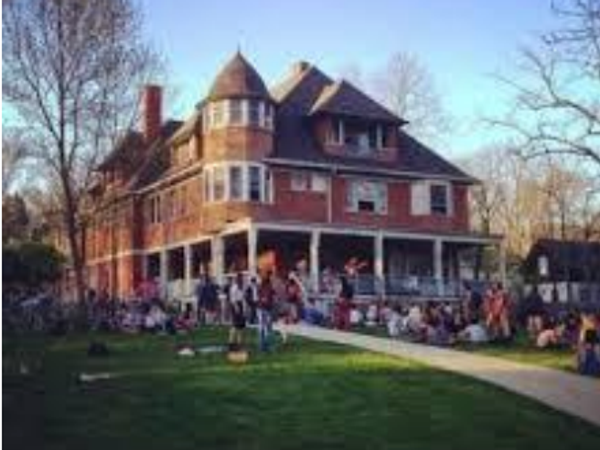
Owen Neaman: The Oberlin Student Cooperative Association, often abbreviated as OSCA, is
arguably one of the keystones of student culture at Oberlin College. Students can choose to live
in dining and or housing co-ops as an alternative to standard campus housing, paying a reduced
price for room and board and living off of the meal plan.
Aza Birdsall-Craycroft: In exchange, members of OSCA are responsible for cooking, cleaning,
and maintaining the co op. Unfortunately, OSCA's relationship with Oberlin College isn't that
simple, and the organization's future might be in jeopardy. OSCA is the largest college dining co
op organization in America and there are some unique Aspects of the organization.
ON: The organization rents buildings owned by the college to use as cooperative buildings.
Harkness, Tank, Keep, and the Third World Social Justice Co op are the main four. However, the
rent contract for these buildings is up for renegotiation in 2025 and past decisions have led to
OSCA being charged higher and higher prices, tightening the food budget. The purchase of
dietary restriction or DR ingredients has also posed an issue. I'm Owen Neaman from the
Harkness Co op.
AB:And I'm Aza Birdsall-Craycroft from Tank Co op.
ON: And we'll be discussing the implications of OSCA's rent contract for the prosperity and the
future of this nonprofit organization
ON: First, we interviewed Olivia Wolgemuth and Annika Lindholm, who are Harkness's food
buyers and are both fourth years at Oberlin College. They are responsible for buying the food
that Harkness cooks according to the food budget they are given by the treasury.
INTERVIEW #1
ON: The first thing I wanted to ask was a really general question, and how has OSCA's current
budget put pressure on the food buying process for you?
AL: I've been foodbuying, this is my second semester foodbuying. And it's always stressful. I
think that's part of the position. Is being able to manage complaints and being able to manage
people not being satisfied with the types of food that are provided for OSCA.And, Olivia and I
have a document. That has like basically a schedule of all of the food we buy and how much
food we buy. That fluctuates from semester to semester given the amount of people in the co-op.
And this semester we have, in comparison to last semester, we have 20 more members but our
food buying budget has stayed the same. You know what I mean? So yeah, it is a challenge. It's
math. It's leveraging what food makes people happy and what food keeps people fed, which can
produce. Of course, occasional feelings of negativity in the co-op, but yeah, do you want to, I
feel like I was just talking for a long time.
OW: Yeah, I think it's the rent that it's, yeah, it's the most difficult thing that we face, like the
price of it. Cause like the vast majority of OSCA member bills goes to rent which is just how it
is. And like in an ideal world, like what you're doing when you're in a, Cooperative is like getting
this sort of like equal return of what you're putting in and sometimes when it's like you feel like
you're Not getting the food that you need or want for the amount of money that you're paying
like that's really hard Yeah, that sucks and like I just came from NASCO, which is the North
American Students of Cooperation conference in Ann Arbor, Michigan. And they do it every
year. And they do it on the University of Michigan campus. And they have a student cooperative
system there. And it's different because it's not a dining co op system. It's primarily a housing
co-op system. And they, but they do make dinner every day. But it's just on a very different scale.
It's like just, it's a completely different picture because of the fact that they own their building. So
that amount of rent isn't even a factor. So branching off of that, talking about the rent contract
and the implications for being a food buyer. So there's a possibility that the new rent contract
would require even more austerity than there already is in OSCA.
ON: A big thing in the past ten years especially OSCA's become a lot more DR friendly in the
three main dining co ops because there's no longer a diversity of different co ops, like with the
Kosher Halal co op, or, Like the natural foods co op, which used, which was keep and now keep
is just a normal co op.
AL: Yeah. If you're looking at, let's say we're buying 50 pounds of oats versus 50 pounds of
gluten free oats. Gluten free oats are triple the price. Wow. Triple, right? If we're buying gluten
free flour versus regular flour, you can get 50 pounds of flour for 20. You can get 25 pounds of
gluten free flour for 115. Same with milk. The comparison is just crazy. And we prioritize that,
but that means that we spend a lot of our money, and this is already on this 30 a week per
student, right? And then when you're factoring in all of the dietary restrictions that, again, make
OSCA what it is and make OSCA accessible for a large variety of students, the price is tough to
keep up with.
INTERVIEW #2
ON: Next we interviewed Ani Zakarian, a fourth year Oberlin student who is currently the
president of OSCA.
ON: In the face of increased austerity, do you think that OSCA might have to close, like, certain
co-ops or will they downsize certain co-ops in terms of membership? And alternatively, if the
rent contract goes well this year, what do you think OSCA will prioritize? Will it prioritize a
stronger or more healthy relationship with the college so rent contracts are less turbulent? What
do you think?
AZ: I think, um, kind of along the lines of what you were saying, I see, if it, if it goes, Not
expected. Um, I think, um, yeah, I mean, we have, um, an obligation to our members to be able
to, um, feed them. And I think that's the, that's the, that's the bottom line. That's the most
important thing.Now I will say, um, it's getting, uh, closer and closer by the day where we can
see the light at the end of the tunnel. Um, I don't know if we'll necessarily be out of it by the end
of the year, but we are, we're, we're getting there. We're, we're a lot, lot closer than we were even,
even two years ago. Anyway, um, so yeah, I think if it goes poorly, um, we may need to reassess.
I think something that the college is interested in, that obviously we aren't interested in, um, is
the idea of them taking over, um, operationally. Like them being on top of like, uh, membership
stuff and, um, being, being the ones to do a lot of the, the student driven work that we do.
I think what we should prioritize is, um, operating budgets and getting back into the green. Um,
and I think there's a lot of, um, structural stuff on a individual co op level that we can.
Reprioritize after kind of, we know that everything is, is protected. Um, cause I think now there's
a lot of like big picture stuff going on.
That's, that's something that I would want to focus on. Um, and yeah, I think it's in everybody's
best interest to have a healthy relationship with the college. Um, and if that's something that ends
up, if rent contract goes well, then that's something that I think we should definitely try to, um,
Keep, keep having.
INTERVIEW #3
ON: Finally, we interviewed Eloise Rich, a third year Oberlin student who is currently the
treasurer of OSCA and is running to become president. If she wins, she will be president during
the renegotiations of the rent contract with Oberlin College.
AB: What has your role as treasurer been like with budget cuts?
ER: So the thing with the OSCA budget is that it's something that is determined by the previous
treasurer and the previous financial committee. Um, and I was a dining treasurer last year, so I
was privy to some of the conversations about setting the budget for this year. Uh, and the reason
that we do it based on the previous year is because that gives us the best sense of, um, What our
actual expenses were. Um, and the way that I really think about it is that like, you know, the
budget, a budget is sort of a projection more than anything. So I haven't done budget cuts myself,
but it is like an ongoing conversation that I have with Ani and with the financial manager, Linda,
because that is something that I'm going to have to set in the spring for the upcoming year, um,
and I guess it's, it's particularly important to be cognizant of OSCA's bottom line as we're going
into the rent contracts renegotiation year.
AB:Perfect. Um, So then, following up with who's kind of perfect, to what extent does the rent
contract affect our food budget?
ER: The rent that we pay to the college is by far our largest expense. And food is one of the
expenses that we're really not looking to cut. You know, we have a budget for food more so as a
guideline. Um, it's We're, we're never, I mean, hypothetically, I think we could reach a point
where it's like, we tell a co-op that you like, you really cannot be making these grandiose
expenses. But more so it's like, we need OSCAns to eat and we need them to eat two meals a day
because that is sort of like the charter of what OSCA is as a group. an organization. Um, so I
think it's, it's something that we need to be like cognizant of, but fundamentally, no matter what
contract is determined between OSCA and the college, like we will do sort of everything in our
power to ensure that our members can still have the community that is necessitated by the dining
experience.
AB: Okay, so you basically also answered my next question in this one, which is perfect. Um,
which is about the priorities you're focusing on budget wise. Um, how long have you been in
OSCA again?
ER: I've been in OSCA since my first year, my fall semester of my freshman year. Yeah, and I'm
now a junior, so.
AB: Um, how has the like, or has the financial outlook of OSCA changed in your time here?
ER: Yeah, um, we're in a, well, it's, it's sort of, it's hard to answer because I'm also a lot more in
the know about our current finances. Um, so, you know, when I'm looking at, you know, food
budgets and supply budgets and general operating budget every single day. Sometimes it does
feel like, Oh my God, this is a lot of money because it is like a multimillion dollar nonprofit.
Like it gets really stressful. Um, but. You know, comparing budgets and expenses from past
years, it does seem overall, like we are in a better place. And I think a lot of that has come from,
um, the interest in OSCA that we were able to garner as a result of the co op credit that we're
giving to each member or having that applied to, you know, their subsequent bill or working that
into a specific payment plan. Um, Food is definitely a lot more expensive. I think that this is like
a sentiment that is universal. Um, or at least nationwide. And yeah, I, that's, that's something that
I think I've been particularly aware of this year is that there has been such an increase in food,
um, prices. And also, you know, when we're getting our food delivered, it's not just the actual.
Items that we eat that we pay for. We pay for the crates that the apples come in. We pay for the
bottles that the milk comes in. We pay for delivery. Like each order has a delivery fee and some
of these vendors are, you know, coming a couple hours distance, um, cause they have routes and
we're just sort of one of the stops on that route.
Um, but yeah, I don't remember where I was even going with that. I was just like, Thinking
about it.
AB: Um, so you're running for president and yeah, the right negotiation is coming up. Um, what
if, if you, if you win that position, if you win the election, like what are your priorities going to
be?
ER: I think that I would love to see a reality in which, like, the, the rent contract is sort of more
transparent, um, to general membership.It's such a complicated legal document, um, and the
relationship between OSCA And the college is frankly one that is, you know, certainly not so
much a student organization and an administrator and really a renter and a landlord. Um, and so
I, I think that that transparency is really important to highlight because as, uh, as paramount, as
cooperative values are to our organization, we are like, In this far more bureaucratic reality, um,
that is just kind of a challenging thing to grapple with.And I'm hopeful that I can, if I am elected
as the president, I can figure out a way in which to, you know, really and truly communicate that
to the college.
Outro: ON+AB
The new rent contract will certainly affect all students dining in OSCA, but it all comes down to
how the contract negotiations play out next year. OSCA will unquestionably maintain its
priorities of providing its members with dining plans that are local, high quality, and healthy.
With elections for all OSCA roles wrapping up soon, preparation for the rent contract discussions
has already begun, and finding leaders who will help negotiate a fair contract with Oberlin
College and a brighter future for OSCA is beginning.