Oberlin Now and Then
2025-02-02T00:00:00.000Z
By Saphira Klearman, Kana Sakamoto, Danielle Leydon
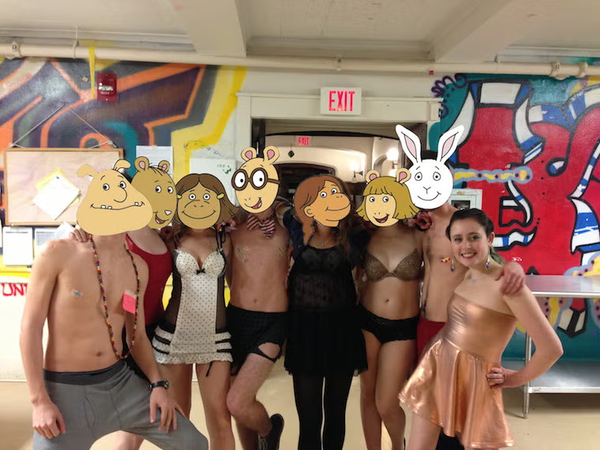
This podcast features the transition of Oberlin’s “weird” culture, focusing attention on naked culture, nightlife, and different traditions - like the Bike Derby and Beer Fairies - have changed over time. Eight alumni and faculty’s perceptions and experiences of these cultures gradually revealed the cultural history of Oberlin.
Transcription
Intro: [00:00:00] Hello everyone. this is Danielle, Kana, and Saphira. everyone. Today we are going to
take a journey through time as we investigate the culture of the unique Oberlin College and how it has
shifted and changed over the years. Oberlin has been known for its hippie and alternative culture for a
long time, but the specific experiences and customs making up that culture are dynamic and ever
evolving.
To understand how the culture we are immersed in today at Oberlin came to be, and to learn more about
what that culture looked like 5, 10, and even 40 years ago, we conducted interviews with several students
and alumni, and asked them to tell us about how they experienced this one of a kind environment.
Let's listen to their stories but before we do, I want to set the scene. In the spring of 2024, I went into
Assistant Professor of Neuroscience Michelle Johnson's office hours, and we began talking about the way
that Oberlin used to be, the [00:01:00] kind of weirdness that Obies used to embody, and the traditions
that had been lost since she had graduated in 2015.
Michelle: After our meeting, I talked to Gabe
Saphira: assistant Professor of Biology Gabe Moore, who also graduated in 2015.
Michelle: And he kind of put out a blast on the Oberlin Alumni Facebook group and so a bunch of people
responded with just their favorite traditions and memories from Oberlin,
Danielle: This included traditions like TGIF, Professor Beers, Tour de Franzia, nudity, and Solarity. All of
which and more, we will explain and explore through this podcast. The full list is attached to this file.
2
Michelle: so we assembled that list and unfortunately it went into a Google Doc to die, so I'm glad that
you contacted us again, so here is us giving it back out.
Gabe: We probably had like anywhere from like 30 to 40 students contribute, probably [00:02:00] from
our time between the years of probably 2011 to 2017, 2018. Um, and it was cool because basically we had
students list the activity, where it happened, when it happened, and then, you know, Um, a little co op
Noct section where people can like add X's to say, Oh yeah, that was like a huge part of our time at
Oberlin.
Um, the ones that got the most co op Nocts, which I think that really resonate with me is TGI Fridays.
Um, I remember that being such a big deal. Like everyone would be out in Wilder Bowl, including
professors. It would smell dank, people would be getting drinks from. And people would just hang out on
all the really nice days.
And it was cool because, like, again, it just felt very community. There would be live DJs or bands that
would play sometimes. There would be, um, O Circus would come and set up, like, tightropes and just
walk on them. And then have people learn how to do tightrope walking. And other people doing juggling
and learning how to do that.
And [00:03:00] other people just, like, hanging out. You know, doing cartwheels or sunning and it's
interesting because I don't think since I've come back to Oberlin's campus I've seen that like everyone on
campus gathering for a thing in community in that same way Of course, I'm biased because I'm a
professor I don't see what happens after hours But when it comes to just like going to Wilder Bowl and
seeing a bunch of people it is tough to not see that anymore
Kana: Samia Mansour, who graduated in 2012 and currently serves as assistant dean and director of the
Office of Religious and Spiritual Life, agreed. Many of our participants agreed that the ways OB utilizes
community spaces has shifted.
Samia: There was just, like, a lot more people outside in common spaces, I feel like. If the weather was
nice in Oberlin, there'd be like a hundred people in Wilder Bowl. A lot of the things that are different have
to do with just also the technology that we had available to us. Like, dorms were really [00:04:00] open.
If you were home, like in your room, you would prop your door open, because that was really the only
way people would know you were there. You didn't have, most people didn't have cell phones, or if they
did, they had, like, limited minute search. So like, we just hung out in the lounges more, hung out in
communal spaces, because that was the only way to see other people.
Danielle: Like many other colleges and universities, nightlife and party culture plays a large role in
shaping Oberlin's culture.
Nightlife at Oberlin itself has undergone several significant changes. Listen to Samia as she describes
what the culture was like during her time as a student.
3
Samia: I mean, Drag Ball and Safer Sex Night, I feel like those were the big traditions of Oberlin. Safer
Sex Night was in the fall and Drag Ball was in the spring and they were huge, huge events.
Danielle: Drag Ball is an over 35 year old tradition where Oberlin College brings together local and
national stars and student performers. Honoring the struggle of LGBTQ and specifically queer and trans
people of color. Safer Sex Night used to be hosted by Oberlin's Sexual [00:05:00] Information Center.
Where coupled with a major dance party, the night boasted a host of different events and activities, raising
awareness for sexual assault. Like, sex toy raffles and free or discounted sexual products, according to an
Oberlin Review article written on October 29th, 1999.
Samia: I remember Friends from other schools in Ohio knew about and would come to Oberlin for these
events because they were so big. And it used to be that it was like all four floors of Wilder were set up for
these events and like every floor would be a different thing. theme and there would be like different
parties happening in different sections of the building.
Like the SCO would be having a party and like Daycaf would have a DJ inside and like Wilder Main of
course would be like the main event and then there'd be like on the second floor lounge there would be
another DJ. Like every floor just had stuff going on. People were running all over the building. It was just
like a massive massive party and like hundreds of people would be here.
The SCO was definitely big. We [00:06:00] had some really big shows and now I can't think off the top of
my head. We used to just get a ton of famous people in Oberlin all the time. My senior year was the year
that Stevie Wonder came and did a show, and we used to get a lot of big name people, and I don't know if
that happens as much anymore
Kana: andrea Pike, an assistant professor of biology, who graduated in 2008, shared a similar perspective.
Andrew: We also, I mean, we got to see the dying days of Safer Sex Night, which I had a lot of fun at
various safer sex nights, but it should have already been done at that point and then it persisted for several
more years, but like, you know, I think that was the thing that started in the 80s maybe, as a very positive
thing about getting people to talk about consent and safe sex and things like that.
And by the time, you know, in the early 2000s when I was here, it was very much just a big party and
people were, Going to a thing that's supposed to be about sexual education and not engaging in safe
sexual practices. And then the other big, I mean, the other big event was always Drag Ball. And it's, I
mean, it's still happening now, but it's way smaller.
Like, when I was a student, it was all of Wilder. Um, the, you know, the main performances were up on
the, up in the [00:07:00] main big space. And people were coming down from the balconies. And, like, all
of campus would attend. There would be professors there. And then downstairs was also, like, events and
education workshops and things like that.
So, I'm glad that's still happening. I think that is still one that has a big place in society. But I would like to
see that get pushed to being bigger again.
4
Saphira: Frederick B. Arts Professor of History, Leonard Smith, who graduated in 1980, recalled how
one very important part of party culture, aka drinking, used to be at Oberlin.
Len: Oberlin was a dry town back then, which meant that there were hurdles to getting alcohol.
The only beer you could get was 3 2 beer, you know, 3. 2 percent alcohol, which, to this day, it makes my
head hurt to think about drinking 3 2 beer. It was just vile. And then about junior year, I knew people with
cars, that's a big difference, that no one, practically no one in Oberlin had a car back then, unless they
were from Ohio.
So junior year, I knew people with cars, and back then, all the liquor stores were owned by the [00:08:00]
state. The state had a monopoly on legal liquor, so, uh, the nearest state store was in Wellington. So, um,
by junior year, I knew somebody with a car who would do these, like, liquor runs to, to Wellington. And
that, also back then, if, if you could get alcohol, the drinking age was 18, so I wasn't even doing anything,
you know, illegal.
Um, but I had a stock, and by junior year, I'd have, like, an aperitif, like, every night. And then, typically,
one weekend night, I would get pretty hammered. My alcohol consumption has been in decline ever since.
Kana: But what about day drinking? Samia and Andrew both mentioned unusual parts of Oberlin's
drinking culture that don't exist in the same way anymore.
Andrew: One of the things that I think I liked a lot better when I was a student than now is how Professor
Beers used to be. So it's still at this go, but it used to be that just like every Thursday was Professor Beers
Day, and you would like invite your professor to go if you wanted, or soda and things obviously.
But it [00:09:00] wasn't, you know, nowadays when it's like a department just choosing to go and only a
few people show up, and it's like a very defined two hour period or whatever, I think it's, Um, it's
definitely much smaller, like not as well attended. But also, sometimes professors just can't make it that
day, because it's, it's the day they're out of town.
Whereas, uh, the old way, you would just be like, Oh, this Thursday, are you around? Oh, you're not?
Like, how about next Thursday? And people could usually make it work, and you'd have people from
different departments coming together, which I thought was a lot of fun. So, um, really, I don't know, I
really preferred that way.
Samia: We used to have a beer fairy. Somebody would always, or multiple people, I guess, would be like
the beer fairy during finals and midterms. And like when you were in the library, they would come around
and pass out PBR.
Saphira: Another tradition that was brought up was Tour de Francia, a bike race with a bunch of different
stops around town, where each stop, you chug a bunch of wine. This is now observed during Senior
Week, which is the week after finals and before graduation. Something else that many of our participants
talked about, including Gabe and Steven Voitel, who joined Oberlin's faculty in 1979, was the bike
[00:10:00] derby.
5
Gabe: Yeah,
Because Tour de Francie is later on the list and that doesn't really happen anymore. Also for safety
reasons.
Saphira: I think it does happen. It happens during Senior Week. Yeah, we do it as seniors. Yeah.
Gabe: Well, as the public health professor, please be safe, but also yay for y'all.
Andrew: The bike derby was always fun. I never participated in it. But, just like, taking a North Quad
and like, bike jousting on two level bikes.
Oh.
Two level bikes? Yeah,
Andrew: like the, you take two bike frames and weld them together on top of each other. So you're like,
you know, ten feet up and jousting on that. Or playing bike polo on it. Yeah. I saw a lot of people take
pretty, pretty nasty falls on that. So, again, maybe a positive thing that they're not doing that anymore.
Westler: I know that the institution stopped that it was a bit crazy because it was, uh, Uh, wasteful of
older bicycles, and I think there were always opportunities for injuries, but that's probably not a tradition
that they want to see, um, revived in any way [00:11:00] whatsoever.
Saphira: One thing's for sure, Obies have always found creative ways to use their bicycles.
Danielle: Gabe, again, class of 2015, brings up interesting points about Yik Yak, an anonymous
discussion post app for college students, Solarity, which is a free concert for Oberlin students with a big
ish name artist, and house parties.
Gabe: House parties? Now that has changed. Cause I've talked to some students about that. Cause it used
to be we'd get on, Which, this is crazy that YikYak made a comeback after it was burned to the ground by
our generation there was bullying, and they would also post when people were having parties. So you
would just be on YikYak, walking around town at like 11pm, just trying to figure out where the house
parties are, and be like, We got a new party! And then we'd go there and then cops would show up and
then they would shut it down.
And then there'd be a, Oh wait, everyone's moving to this one. And then you just see a mob of people
from that party going to the next one. The scale of events feels so different. Cause yeah, like TGI
[00:12:00] Fridays is much smaller. Drag Ball is much smaller. Solarity feels much smaller. I'm slightly
outing myself.
I did go to Solarity when Cupcake was here. But, incognito, cause I was like, I'm in the back, this is y'all's
thing, I don't want to like, harsh anyone's mellow, so to speak. And she gave a great performance, and
6
Kuku Kawaii was great, and I got to hang out with her afterward. Anyways, we're just bragging at this
point.
laughter But, I remember Solarity used to have to hop around on campus, because every time they moved
to a new location, they would piss someone off. They'd be like, it was on North Quad one year in a giant
circus tent, and it was circus themed, and then all the people who lived in the dorms were like, absolutely
not.
The base kept us up till like one in the morning. But now it's like in the field house, which is like off
campus, and you have to walk to it, and it's not as visible, so it doesn't feel as big.
Kana: What's also not as big is Oberlin's well known tradition of nudity and barefoot. Nudity was a
central [00:13:00] part of the hippie counterculture in the 1960s in Lin. Events featuring nudity and
culture to value positivity were a major part of campus culture. Samia Mansour, shared her perception of
nudity a decade ago.
Samia: I think, you know, when I was a student, Oberlin was really like, people were naked a lot. Naked
everywhere. Naked run was a thing that happened at the end of every semester where the sports teams
would run naked through all of campus and through mud, and that was just like a tradition that we all
knew was coming every semester.
So many people were barefoot. Everybody was barefoot.
Kana: Andrea Pike and Gabe Moore, assistant professors of biology. who graduated in 2008 and 2015,
respectively, also revealed what nudity culture looked like at the time when they were obies.
Gabe: Like, you know, like the [00:14:00] naked run would always happen during finals.
I used to run through campus. I think that's when Pike was a student.
Andrew: But then we got, we were told we couldn't do that when they started cracking down on hazing,
which is, again, a very positive overall change, but you lose the event in that case.
Gabe: So then it was relegated to the library, where they would just run through all four levels of mud
and then go back to their clothes and then leave.
So that was like, fun. Um, yeah, nudity was just a thing. There were people who walked around barefoot
more, I remember.
Andrew: Oh, Oberlin's a clothing optional campus, so people would like, be in academic buildings
without Full attire.
Kana: Ella Newcomb, who is a luminous from the cross of 2023, and the sustained dialogue coordinator
current mentioned.
7
The college received with nudity before and after the COVID-19 pandemic.
Ella: I feel like post COVID was the first time I went to a nude event.
I participated in a couple. By the time I was a student, the Naked Run was. Next, uh, [00:15:00] naked
brunches were not a thing, but nude events were still a thing. But they had a room in Hark that was like
deep in the basement. That's where they would do the nude events, uh, away from any prying eyes.
Saphira: Harkness is a building that houses the Hark Co op, one of Oberlin's communal dining and
housing options, and has a reputation for hosting nude events.
Ella: So before COVID, I was a freshman and I got to hear a lot about traditions. During COVID, it felt a
lot like the college was trying to create tradition for students who were so isolated. So like having a lot of
outdoor events, eating. outside having these like outdoor movies and things like that options for students
to connect and then post COVID kind of all of those things fell away and there was a great push from a
lot of people in my grade and the grades below who just wanted to like cultivate traditions and understand
the things we were missing.
Andrew: I also think like,
mean, I think some of this stuff isn't like intentional change by [00:16:00] anybody. It's just that like,
COVID screwed everything up and people like traditions get lost if there's not somebody doing it every
year.
Kana: As a fifth generation legacy of Oberlin, Ella also shared her family history with Oberlin's Naked
Cartier. Which clearly demonstrates a change over time.
Ella: My parents were here in the 80s, and they were very heavily wrapped up in kind of the party culture
world.
They always used to talk about the hark, nude parties, the nude brunches, the naked showers, all those
kinds of things. And then my brother came here in 2010. And, um, Well, 2014. And he was in the last
classes who experienced the naked run. Um, and so he again was not like someone who would be naked
all the time, but he had a lot of friends who heavily participated in it, loved it.
It was like such a thing about being in community. Um, but then of course there became the conversation
of consent. And so they kind of moved towards really as. Prism exploded [00:17:00] and they really
started working towards consensual time and work at Oberlin that a lot of these kind of naked events fell
off.
Kana: However, the interview also highlighted that personal experience with nudity often depend on how
an individual navigates their college life. Leonard Smith, a professor of history and Oberlin graduate from
the class of 1980s, revealed that he didn't consider himself deeply involved in this culture.
Len: I don't really remember there being much nudity at all, um, except where you would expect to see it.
8
There were, I have no idea what the showers are like today, but showers, you know, I saw naked people in
the showers. I, I, I honestly don't remember, um, seeing naked people beyond that. I've never had a
significant romantic relationship with somebody from Oberlin. As a result of that, I didn't see much
nudity.
Kana: To summarize, Oberlin's nudity culture did exist as part of campus culture. However, the naked
weren't extinct due to [00:18:00] multiple health concerns, and nudity receives less support and
involvement because of changes in the value of sexual consent.
Saphira: One of those places nudity was a health concern was the co op kitchens. Allegedly, some co op
chefs used to cook in the nude. But not anymore. Samia, Michelle, and Gabe talk about some other ways
that Oberlin's co ops and dining halls have changed.
Samia: Dascombe, of course, used to be a dining hall, um, and that's where Fourth Meal was, and that
was also like a, like a cool spot. All of that section where like safety and security and caps, I think is that,
that was all dining hall. Um, and daycap used to be cooler because it was like a hangout spot. I remember
like my freshman year, like month one, my roommate went on a date with somebody to daycap. Like
people would hang there. It also used to have a smoothie bar. Um, which I hear is a big sad loss that
doesn't [00:19:00] exist.
And then the Rat Skeller used to be a sit down restaurant.
Michelle: I just miss the rat. I, I, I have talked to someone from AVI. I understand why the rat can't go
back to being a restaurant anymore. For those who aren't aware, it's literally just like state codes. Um, but
the rat was really great because it was a place where you could like go and get like an actual sit down
meal and it was small,
Gabe: And it was just like, again, this sort of like, I don't know, like, spaces where people could just mix
and mingle and be like, Oh, there's my friend from a class I haven't seen in a while.
And you could just like interact. And I feel like those spaces are becoming just fewer.
Michelle: and like co ops, I think were From what I've heard from students who are current co oppers, it
seems like co ops are more integrated into the entirety of campus, and I think because the funding
situation for OSCA has changed, you're only in a co op if, like, you die hard want to be in a co op, versus
[00:20:00] someone like me, who frankly was in a co op because it was way better financially, and I loved
being in a co op. But if it had cost the same, and I was already working a bunch of other jobs, I wouldn't
have had time to be in a co op.
Also they were just like more opportunities for faculty and students to eat lunch without the faculty
necessarily having to bring in outside food.
Saphira: Throughout the interviews we conducted, a shared sentiment arose about Obies utilizing shared
spaces in different ways and the seeming decrease in participation in many community oriented events.
9
Yet there are some things that have stayed the same, even if they look a little different now. Let's see what
Samia, Michelle, Andrew, and Len, spending 40 years of experience, have to say about it.
Samia: My first Oberlin memory? It was in 2005 when I came here on a college tour. So you have to
think about like mid 2000s vibes.
[00:21:00] Oberlin we're talking like pre social media, pre iPhones, pre like a lot of the tech. It was very,
it was a much different world and it was really like, I feel like grungy is the word I would use to describe
it. It was like very beaut when I came to Oberlin for the first time for my tour, it was so beautiful.
I loved this campus. The students were like barefoot and with dreadlocks and clearly thrifted clothing.
And they were just kind of like frolicking around. I remember distinctly on my college tour, we had like
at one moment a student came up to us and said, handed us all flyers and was like, join Oberlin's anarchist
club.
And I was like, wow, this is super rad.
Oberlin was so weird. Like that, I think that's what it was known for. It was like, that was its thing. Obies
came here specifically because they were weird or they felt weird in their communities before. Or it was
like definitely, if you were a [00:22:00] popular kid in high school, you were not going to Oberlin.
Michelle: Leslie Quache, who is an alum, would talk about how, like, Oberlin was weird, but it's like
everyone had dyed hair and a bunch of piercings. Well, guess what's super common in our culture?
Everyone having dyed hair and a bunch of piercings. And so it's not weird any longer for anyone to have
that.
And so it doesn't seem weird anymore. stand out at all for an OB to engage.
Andrew: Agree. I think it is just like weird has shifted in the global culture. And so like some of that stuff
just doesn't, doesn't seem weird anymore. It doesn't seem rebellious. And like, I don't know, I think
Oberlin people are still doing weird stuff just in their own different way.
I was worried when I came back a couple of years ago that like, I'd come back to Oakland and be
disappointed in what I found, like, the students weren't as good or cool or whatever as I remember them
being, or the professors weren't as good or whatever.
Um, and now I've, you know, I've worked at several other universities and colleges, I've taught at several
other colleges and universities, and so I've gotten to see them and like, you know, Oberlin students are
still really fucking weird. Um, it's just like a different weird than what my weird was. And I think, you
know, [00:23:00] piercings and dyed hair are a good example.
Len: In many ways, though, I'm struck by how the same it is. When I walk to class nowadays, or when I
walk across campus, I swear to you I still see people I went to college with. I mean, just kind of visually,
the students are remarkably the same. I mean, just kind of stunningly the same.
10
I think the kind of nerdishness, which I see as a compliment, um, the eccentricities, the passions about
some surprising things, uh, the sort of holier than thou attitude sometimes about certain political issues,
which I think actually goes back to Charles Finney, goes back to the deepest origins of the institution.
Samia: There was, and I think there still is this deep connection to wanting to change the world and
wanting to make an impact on the world and social justice and thinking globally about how we can affect
change.
Len: The continuities impress me much more than the differences.
Michelle: I think, ultimately, And I'm probably lame. [00:24:00] My big thing is I just want to make sure
you all are having fun.
And I know this sounds so dumb, but it's so true. You are never as free as you are right now in college.
And whatever that looks like to you, just make sure you're doing something weird and getting stories and
My 21st birthday, my friends bought me a bottle of champagne, and I put a hole in the ceiling of South,
on like the third floor.
The hole's probably gone, but like, it's these little tiny stories that you should, um, make sure you're,
you're cultivating.
Outro
As we listened to the stories of alumni and faculty, we saw how Oberlin’s culture has been shaped, passed
down, disrupted, revitalized, and cherished by its students over time. We extend our gratitude to all our
interviewees for their invaluable contributions. This audio was brought to you by Danielle, Saphira and
Kana.