Come On Up to the House: An American in Guatemala
2026-02-07T00:00:00.000Z
By Griffin Larson-Erf
College freshman Griffin Larson-Erf details a peculiar family story featuring divorce, several different countries, dodging child support, and even murder.
This is a story about a killing and about a house. It's a story I like because it starts out dark, ends up sweet, and it twists like hell in the middle. But before I can tell it to you, I have to let you know a few things. All names of people mentioned in the following events have been changed to protect privacy.
Likewise, the words from interviews conducted with these people will be read by Oberlin College students in place of actual audio clips. Some of these quotes have been edited slightly to make them easier to read. Names have been altered both in interviews and in primary source documents, which will be read aloud in this piece.
Moreover, some of those documents are written in Less than Perfect English voice actors will read the exact words they contain. I first heard this story from Esme, my first cousin once removed. I'm choosing to trust her version of events because I've gotten most of my information from her, either from an interview a conducted with her in the summer of 2025, or from a collection of documents she provided to me related to the story.
Some of them are letters as May originally wrote during the time of these events. One from January, 2003, one from July of the same year, one from August, 2004, and one from the same month 2010. Other documents consist of printed copies of different emails as May exchanged in August of 2000, October of 2000 and August of 2001, respectively.
Others are news clippings related to the events from the St. Louis Post Dispatch and the New York Times. One is a document from a coroner's examination. Now Esme is in this story, but it doesn't start with her. It opens instead with her brother Jerry.
Jerry was a complicated figure. He had several sides to him and his daughter. Joanne said that none of them outweighed any of the others As a father, she remembered him being normally only loosely present in his kids' lives and providing them with an extreme degree of freedom. She recalled him never knowing how to spell her name, not even after 30 years of her life, he liked to show off.
For instance, in an interview, Joanne remembered a time when he arrived to pick her up from a high school summer school class. Jerry drove a Lincoln Continental with his initials on the sides, and someone had previously poured something on his car that caused the paint to drip. He is, got the radio up loud, the windows down, rolls up, and I'm like, again, mortified.
Just thinking, okay, just get into the car as quick as you can because my friends are like, who's that? And I'm like, oh, it's just my dad. And he gets out of the car he has on Terrycloth. He had an old pair of sweatpants that had been cut off crooked. So one leg short and one leg a little longer. He had on a rock radio station T-shirt that he had cut it and it was literally caught like a belly shirt.
So his big gut, I mean, he was probably pushing definitely over 200 pounds, maybe two 50 at that point, and had a belly shirt cut off. So his belly's hanging out, his shorts are cut, and he walks out of the car to come greet me with all of my friends. Like it's just another day. And again, I was mortified, but I think he loved the fact that he was drawing attention to the situation.
Joanne recalls her dad and her mother getting divorced when she was in the sixth grade. After the divorce, Jerry failed to pay child support. According to Esme, it was because his ex-wife came from a wealthier family than he did in Jerry's mind. They were the ones who should be supporting her. His ex-wife tried taking Jerry to court to get him to pay according to Joanne.
That turned into an example of another side of him, his belief that he could get away with things. There was a court date and my dad had to go to court for not paying child support, and after the fact, he ended up coming to me and telling me that he showed up in court. He bought himself a suit from Salvation Army.
He pled the fact that he was a popper and didn't have any money and that he loved his kids, but didn't have any money and told a whole story and got away with it. Joanne remembers her father actually boasting about this to her, enjoying the fact, not just that he could get her mother mad, but that he could fool a judge.
According to Esme, though, that fooling only went so far. Jerry tried moving from Michigan to Illinois to avoid paying child support, but the authorities found him, so we moved again this time to Mexico. And then after staying in several parts of Central America to Guatemala, Jerry was staying in SGO when he met a young woman named Marta.
Esme estimates that at this time Jerry was about 55. While Marta was 19 and raising a young child, Edgar on her own, Jerry and Marta started dating and they moved to the town of Antigua where they jointly ran a tobacco shop in an interview. Esme remembered that while he was starting a new life, Jerry was not infrequently intruding in her.
He would call up and say, I don't understand why you have a job. You don't really need a job. I have eight things I want you to do for me. I want you to call social security. I want you to do this. I want you to do that. These are all the things I want you to do for me, and I expect you to do them for me because I'm not in the United States, so you're my sister.
You should do this stuff for me. But for the people he was around in Guatemala, he was quite a different person. For instance, Edgar, who remembered being about three or four years of age during the events of this story, described him to me as kind, affectionate, and generous. He particularly remembered the birthday parties Jerry would create for him with clowns and pinatas.
Joanne remembered him being a markedly different father for Edgar than he had been for her. My dad was so excited about the opportunity to parent Edgar and I would talk to him and he would talk about like different parenting books that they had and things that him and Marta were figuring out to do as far as parenting went.
And I always found it fascinating because it. Was a side of my dad I never saw, and Edgar wasn't the only child that Jerry was looking out for outside of Antigua. In the town of Hoko. Tenango, he and Marta rented out rooms to a number of people, including a family of six, a woman named Laura and her five children.
One of them, Domingo, wrote an email to Esme that Jerry quote, always knew everything, like when my stepfather hit me and always wanted to take my sisters out of the house. According to Esme, that refers to Domingo's stepfather trying to make Domingo's sisters have sex with the stepfather's friends. Esme wasn't positive about the details here, but from what she understands, when Jerry found out what was going on, he confronted Domingo's stepfather, nor is that the only way Jerry helped out.
He employed Domingo at his tobacco shop and in another email, Domingo told Esme that money went toward food and clothing for him and to help his family. It's with Domingo at the tobacco shop that the next part of this story begins, 'cause that shop was the last place he ever saw Jerry alive. This is another portion of Domingo's first email.
He says that per his routine, he arrived at the tobacco shop at three in the afternoon on August 3rd, 2000. Once he was done with school. I wretched at the busyness and I found Jerry and he told me that he was a little bored, so he gave me the keys and I had to stay in the busyness until 7:00 PM When he went from the busyness, he told me goodbye and he told me good luck, Domingo, without inking that it would both last time I see him.
Esme says that normally when it came time to close the shop while Jerry wasn't there, Domingo would call him to ask how to proceed. Domingo says that it was Jerry who would normally call him. Either way. Domingo tried to reach Jerry at home to no avail. When he got home, Domingo saw that there were no lights on in Jerry's room.
He says he called Jerry twice, but the door didn't open. Another one of Jerry's renters was a woman who sold candy out of her room. Domingo says that at 4:30 PM that woman had heard what he called a hard noise, but she didn't see anything that could have caused it. It turned out to be a gunshot fired at Jerry.
At the time of the shot, the only residence present at the building were the candy store lady and Domingo's younger brother, who was situated by the Pila, a concrete basin full of water that many Guatemalan homes have. The Pila lay in front of the door to Jerry's room, and the young boy heard that door open.
When he heard the door opened, he looked back to see who it was. He saw a lady going down with a gun in her hand, but my brother say that she went out with a bag and when she saw the boy at the pillow, she bent down her herd and went, he saw that her hair was short and tick. My brother and the lady from the store says that the woman locked like Marta.
The investigators already have their story or declaration. According to Esme, Laura and her family didn't notify anyone about the murder. They don't do anything about it because they're not American, and they do not want to tell Guatemalan police that they know there's a shot American in their place of residence.
I mean, who's gonna be suspected? Maybe they're gonna blame it on Laura. You know, who knows. So they just wait and next morning Jerry and Martis cleaning lady comes and she has a key to the door. So she goes upstairs and she finds Jerry's body there naked, bloody. I saw the wall. There was blood all over the wall, hand prints coming down the wall and blood.
I mean, I didn't see it until three weeks later, but it was still like that. So she goes up, the cleaning lady goes up and sees Jerry dead. She doesn't wanna call the police. She's another Guatemalan with no power. She's a cleaning lady. She calls her husband. Her husband comes and looks at Jerry's body and says, yes, he's dead.
The cleaning lady's husband is no more eager to go to the police than she is. I asked DeSay why the two of them would be afraid that they would be blamed. Here's what she told me, because they have a dead American and the police want an answer, and there might be the easiest answer. Why do people in the United States get put in prison for murders they didn't commit?
The two of them are able, Esme is not sure how to call two other people. An American carpenter and a Canadian painter, both of whom were working on a new house. Jerry and Marta were buying in the town of Vieja. According to Es me's reply to Domingo's email. Jerry had spoken of marrying Marta and living with her in the new house thereafter.
And they came back to the house. They looked at Jerry and they said, yes, he's really dead. Nobody's making this up. We know this now firsthand. And they actually notified the police because they were feeling much less vulnerable because they were an American and a Canadian, one of them, Esme is not sure who also calls Es me's daughter in the US who passes on the information to Esme.
After Jerry was killed, the police cordoned off the scene, stationed an officer to keep an eye on the place, and refused to let Marta enter her room. In her reply to Domingo, Esay writes that an associate of Jerry's had told her that while staying at the house they were buying, he and Marta had had an argument regarding another woman.
She said in her interview that Marta believed Jerry was sleeping with a 19-year-old girl who was a member of a gang. It was because of that argument that the police suspected Marta. It's worth noting that Esme didn't agree with the police and still does not what's more, Domingo wasn't aware whether or not Jerry and Marta had argued Jerry was killed on August 4th, 2000.
According to Esme and Domingo's correspondence, Marta had left with Edgar on August 1st to stay at her parents' house in Guatemala City as Esme put it in her interview to take a break from Jerry. Edgar, on the other hand, says that they went to visit his grandmother. While kept outta their room, the two of them were able to stay with Marta's brothers who lived in Guatemala City even So it was a difficult time for Marta.
Edgar said that she cried a lot and grew thin from not eating, and Marta was saying, could you please come back? 'cause they won't let me in the apartment until you're here and Edgar doesn't have any toys and I only have one pair of shoes and I have another pair of shoes or two in the apartment. I'd like to change my shoes.
Esme and her husband had been to Guatemala once before to visit Jerry. Three weeks or so after they learned of his death, they went again, just one of numerous trips to come over the years. When they first went back, Esme and her husband stayed in Guatemala for about a week. Jerry had taken out life insurance worth $100,000 and he put Esme in charge of giving the money to his daughters.
She remembers giving about $65,000 from it to Jerry's ex-wife. To pay for the child support he owed her. As it happens, Jerry was one of eight American citizens killed in Guatemala between 1999 and 2001 in Guatemala. A special prosecutor was given the task of investigating that series of murders, but the prosecutor's team was under-resourced and overworked.
In 2002, Esme, her husband and their lawyers met with the official who had been given Jerry's death to investigate. She writes of going to an office full of people holding three to four desks. Think police show on TV where desks are about five feet from one another. Authorities suspected that one to two female teenagers might have been responsible.
They talked to several members of the gang that was thought to have carried out the murder, but couldn't specifically prove the guilt of any of them. One woman they'd hoped to speak with that already left Guatemala for Costa Rica with another American man. According to Esme, that marked the end of the search for Jerry's killer.
Meanwhile, Esme had already become embroiled in a different matter. The house Jerry had been buying in Vieja. Marta didn't want it, and Jerry's kids wouldn't be taking it over. So Esme and her husband were looking to sell the place. It would be 10 years before they finally made it happen. Esme recalls that while he was still alive, Jerry had sent her letters, giving her directions as to how to proceed.
In the event of his death, he pointed her toward the lawyer she first worked with in attempting to sell the house. That man would end up cheating her and her husband out of roughly $12,000 sent to pay what he claimed were transfer of title taxes to keep the house in their possession. To replace him.
Esme and her husband managed to get in touch with a different law firm. They don't really do this kind of law. I mean, they're much more of a corporate firm, but they felt so badly that the first lawyer had cheated us, that they not only worked with us for the next nine years to get clear title to this house, but they also took that original lawyer to a committee of the judicial system that is supposed to cen your crooked lawyers.
And they said that unfortunately, it was a panel of three lawyers and two of them were cronies of his. And so they found in his favor, but at least they did that for us, so that makes you feel good. From there, the task was to negotiate with one Dr. Maldonado from whom Jerry and Marta had been buying the house.
The doctor's wife hadn't wanted him to sell it in the first place, so as May and her side tried offering it back to him for the same price for which he had sold it, $60,000. The tricky thing here is that Dr. Maldonado did not own the house when Marta and Jerry started paying him for it. He had made an agreement with a real estate company in 1990 that gave him 10 years to choose to buy the house.
But Esme writes in her January, 2003 letter that under Guatemala law, that contract actually became an effective in 1992. Since the doctor hadn't bought the house, Marta and Jerry made their first payment to him in 1998. Dr. Maldonado claimed that he wouldn't be able to pay them for the house in cash, but offered instead to turn over a piece of property he owned that was equivalent in value to the price of the house.
Esme, Marta and one of their lawyers went with Dr. Maldonado to see the place for themselves. I'll let Esme tell the story from there, using this selection from one of her letters. Unfortunately, when we arrived, we discovered that not only is the house not located in Antigua Township, but there is no house behind the wall and beyond.
The gate is a nice piece of grass. There's a little shed in one corner for garden equipment and there's a concrete pad for a picnic table. Dr. Maldonado seems to think that because electricity has been brought to the perimeter of the land and because there's a well dug about two thirds of the way back in the yard, that the property is suddenly worth $60,000.
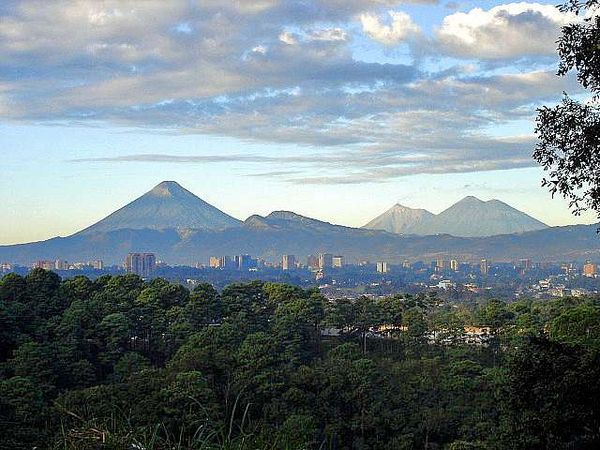
Oh, I forgot to say it even has a view of the volcano. Esme and her side were not prepared to accept the land as payment, and the two sides agreed to have it appraised, but that turned out to be a little tougher than expected. Here's what one of her lawyers wrote to Esme. I have very bad news about your case.
I'm sorry. I can't write you before to tell you that Dr. Maldonado was sick and his wife was talking me for more time to give me the information about the property in San Pedro for the appraisal. There's a note added in parentheses here. This is the property he wanted to use to resolve his debt. I was calling to Dr.
Maldonado many times, but his wife told me that he can't talk with me. I think she was lying to me, but today I had a surprise because I called again and his wife told me that Dr. Maldonado is death. I didn't know that Dr. Maldonado was sick of cancer. The real estate development company from whom Dr.
Maldonado had bought the house was at this point, indisposed to take ownership of the property. So Esme and her side had to do so themselves. Under Guatemalan law, she writes, they could ask a court for a title to the property if they could prove that they had been in control of the place for 10 years.
Between Maldonado's building of the House, Jerry and Marta's buying it, and Marta's management of the place after Jerry's death, various people had fulfilled that requirement in a piecemeal fashion from 1990 to that point. Es May's 2004 letter describes working with some difficulty to find people who would testify to March's control of the house, as well as handling a burglary of the property and seeking to allow other people to rent the place in order to generate money for its own upkeep.
After that, the next available detail in this story is from 2010 when someone finally purchased the house, it went for just $40,000 a price. Esme attributed to the 2008 financial crash. And that's where the story ends. But only in one sense, Esme still travels to Guatemala every year. She visits the people she knows, not just Edgar, but several others, and in some ways she's been able to help them out.
Take this one instance that I talked to Edgar about in an interview. Dera
gon Nintendo PlayStation ES gadgets. Edgar's saying here that on one occasion when they visited him, Esme and her husband brought him portable Nintendo and PlayStation consoles that he said got him interested in the gamer world.
From there, Edgar got more interested in technology in general. He ended up studying information technology in college and when he became stymied while searching for a job, Esme was able to pay him to volunteer in the IT department of a local nonprofit. Following his work there, he was able to find a position with a health clinic.
I asked Edgar if he thought he had learned anything from the event of Jerry's death. Edgar told me he learned to be strong, to keep going through adversity and to work hard for what he wants.
He notes that he learned that from his mother as well when she was, he puts this in quotation marks left alone with him. Joanne had her own lesson from her father's death. I think it highlights how things can quickly change, you know, unexpectedly and quickly change. I always have that awareness that things, you know.
With a phone call, things drastically change. Special thanks to all of our voice actors from this episode. That was Winnie Einhorn as Esme, Sophie Brown, as Joanne Fernando Garcia as Edgar Colin Rivera, as Domingo and I and Griffin Larson Earth. Any music used in this piece is courtesy of DS Script. Thank you for listening.